Pinarello Titan Road – Verkauft
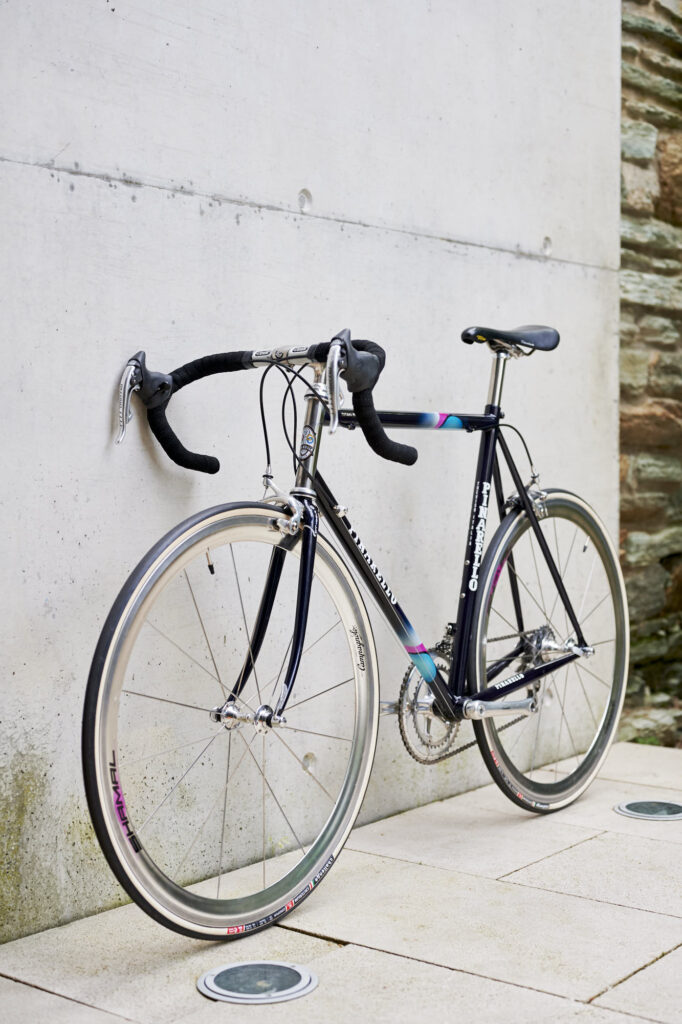
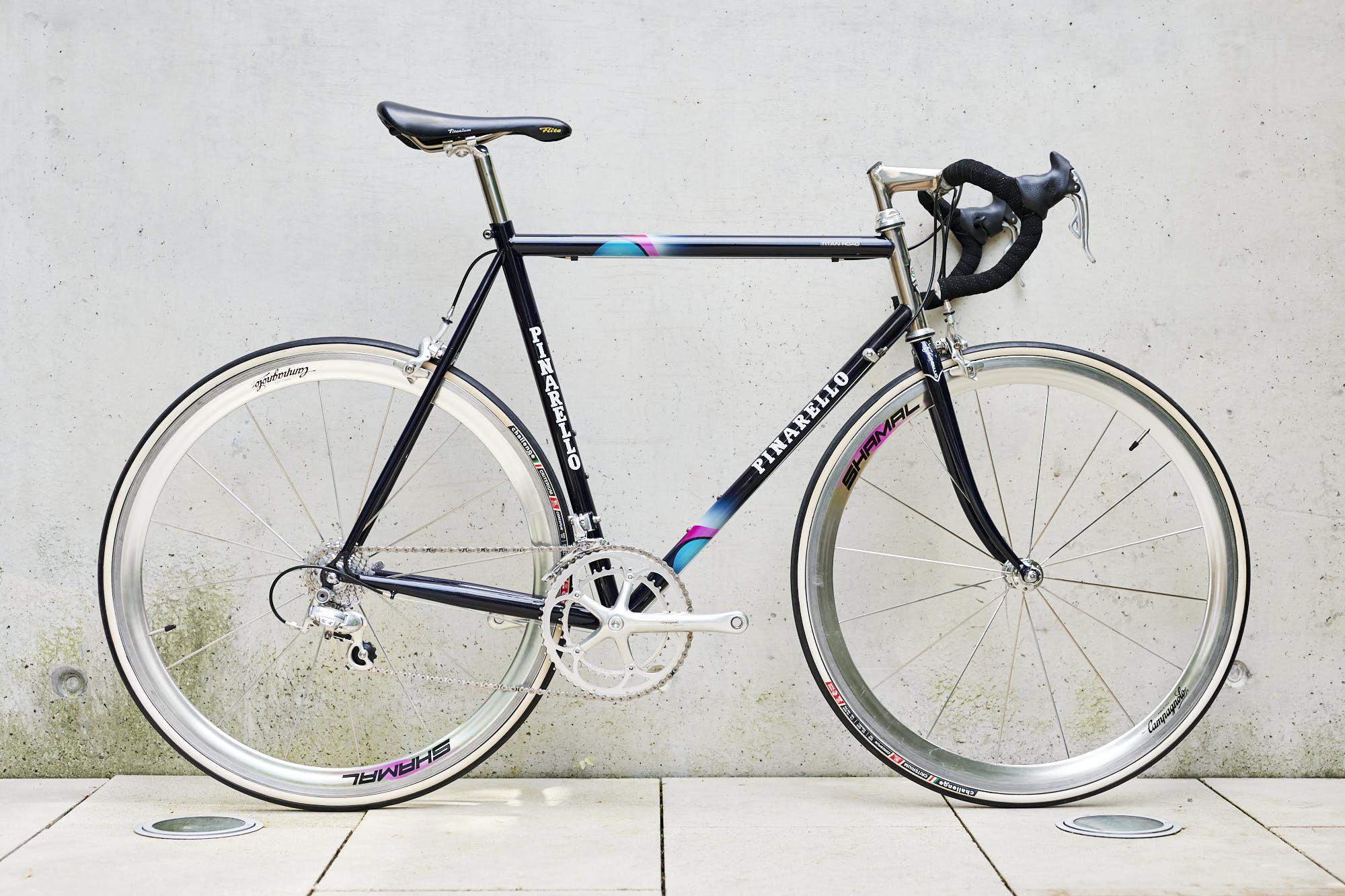
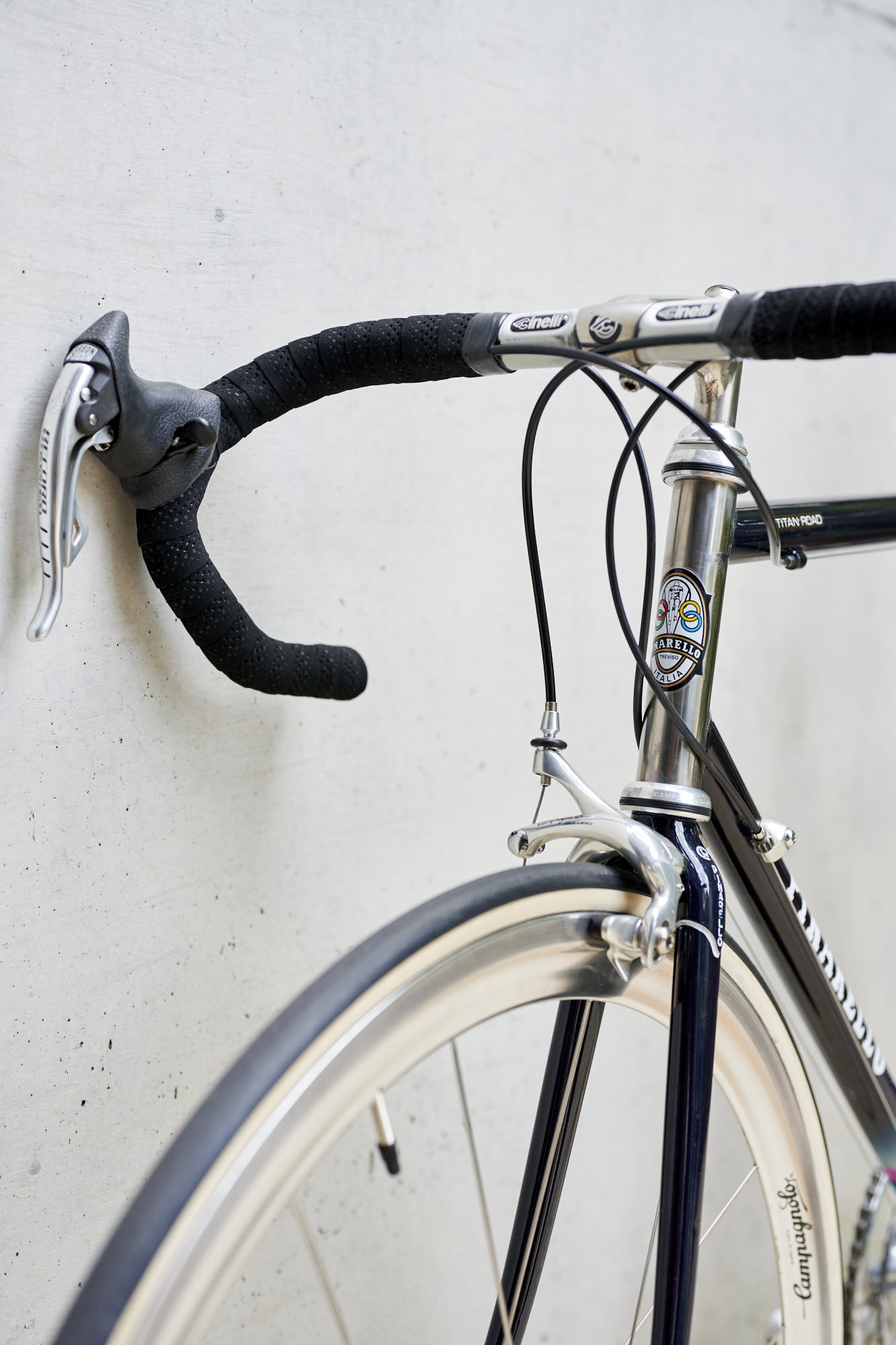
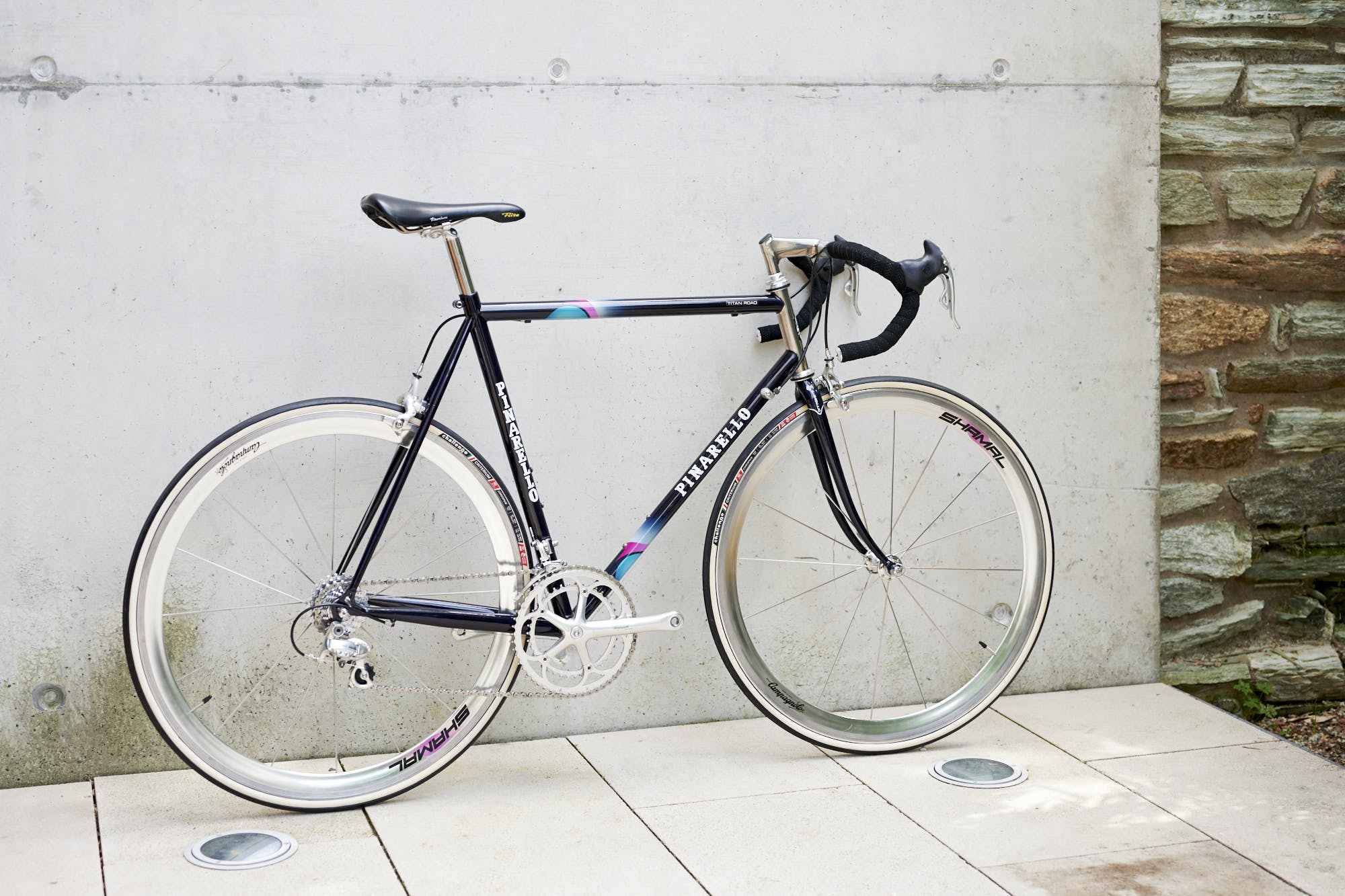
The Titan Road is the first and last titanium bike from Pinarello. It was created in a dynamic period of high pressure research for new and better frame materials. This unique bike from 1995 is a product of that time.
Exclusive product of a small series Pinarello
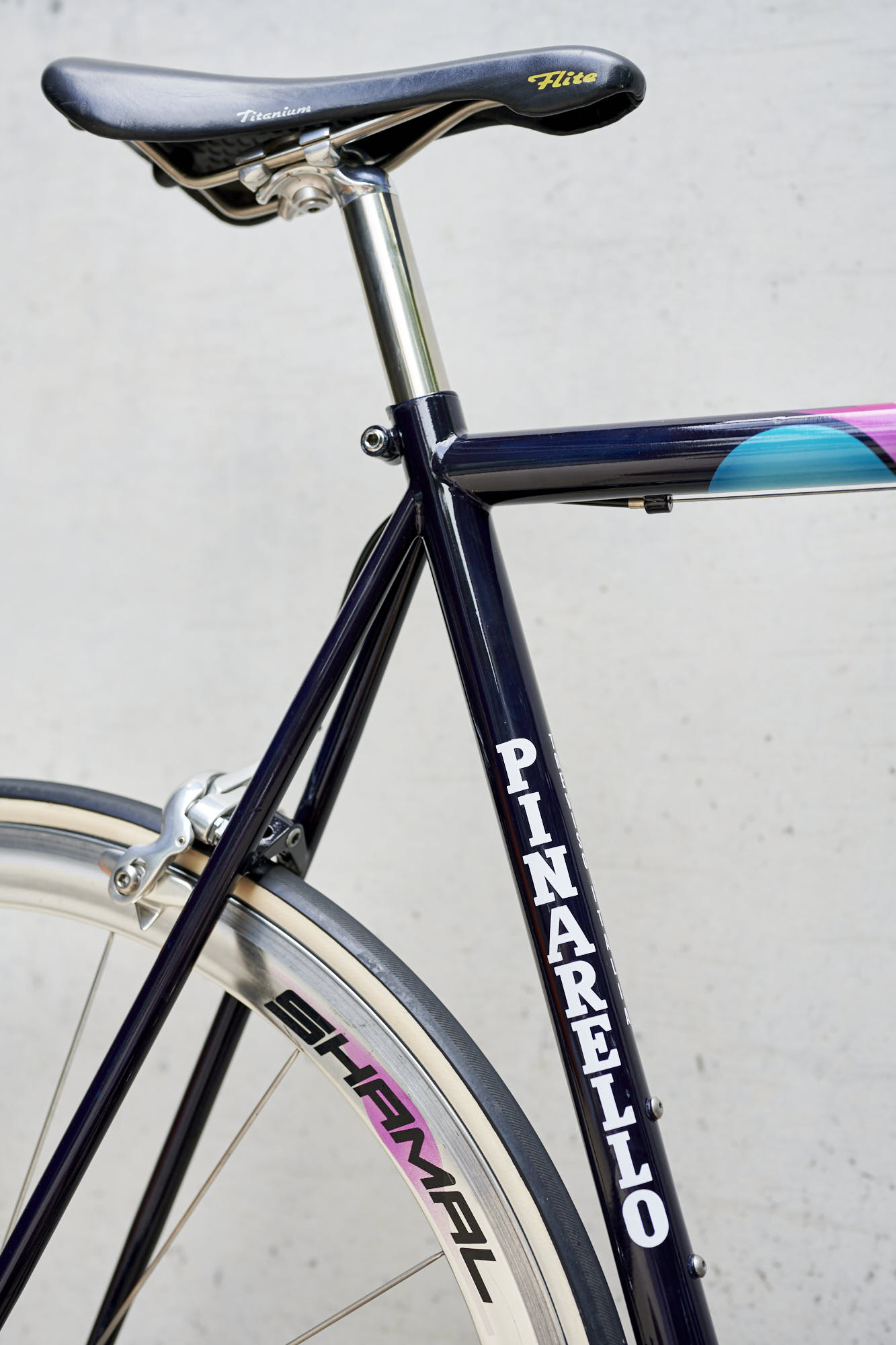
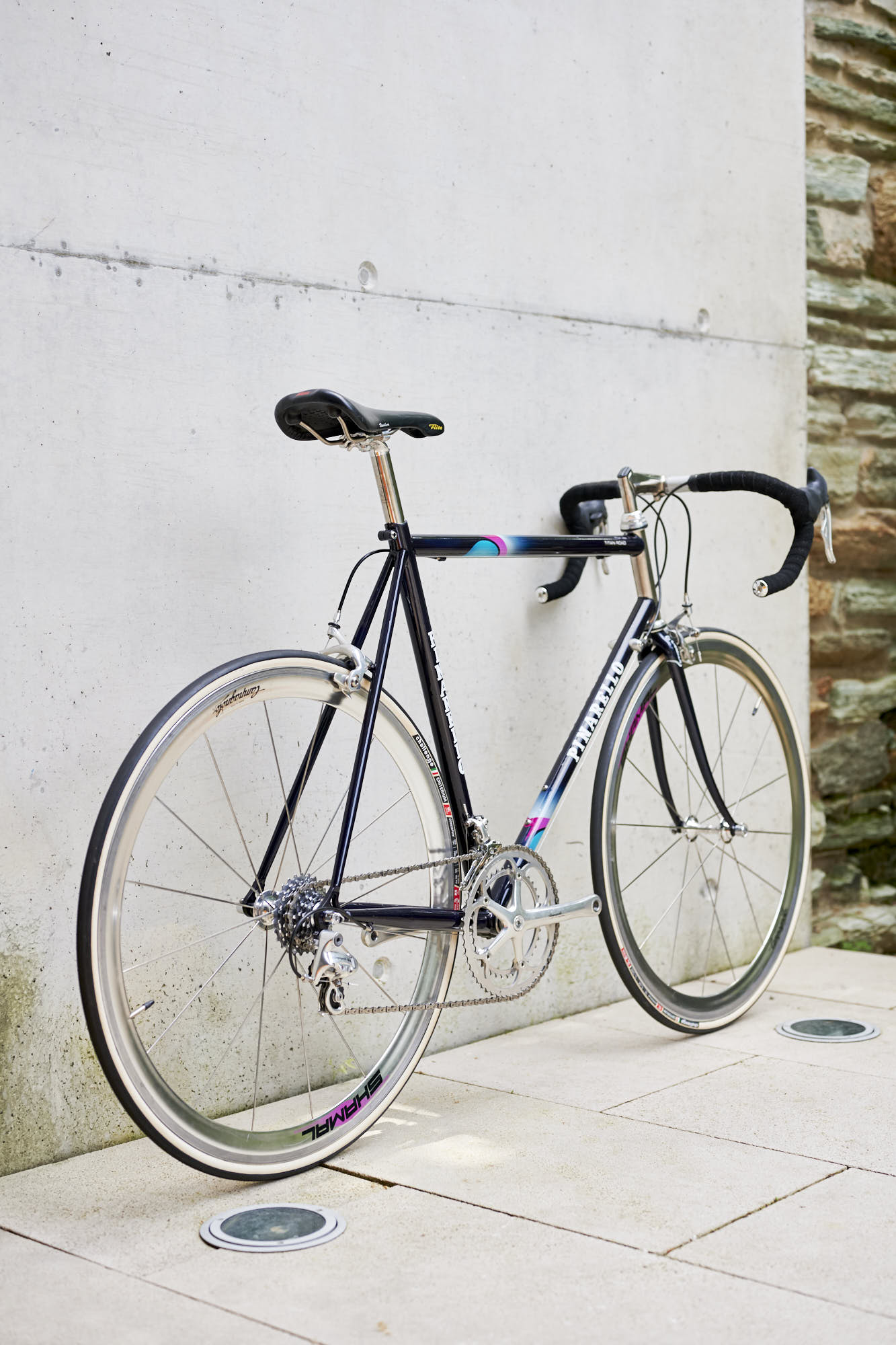
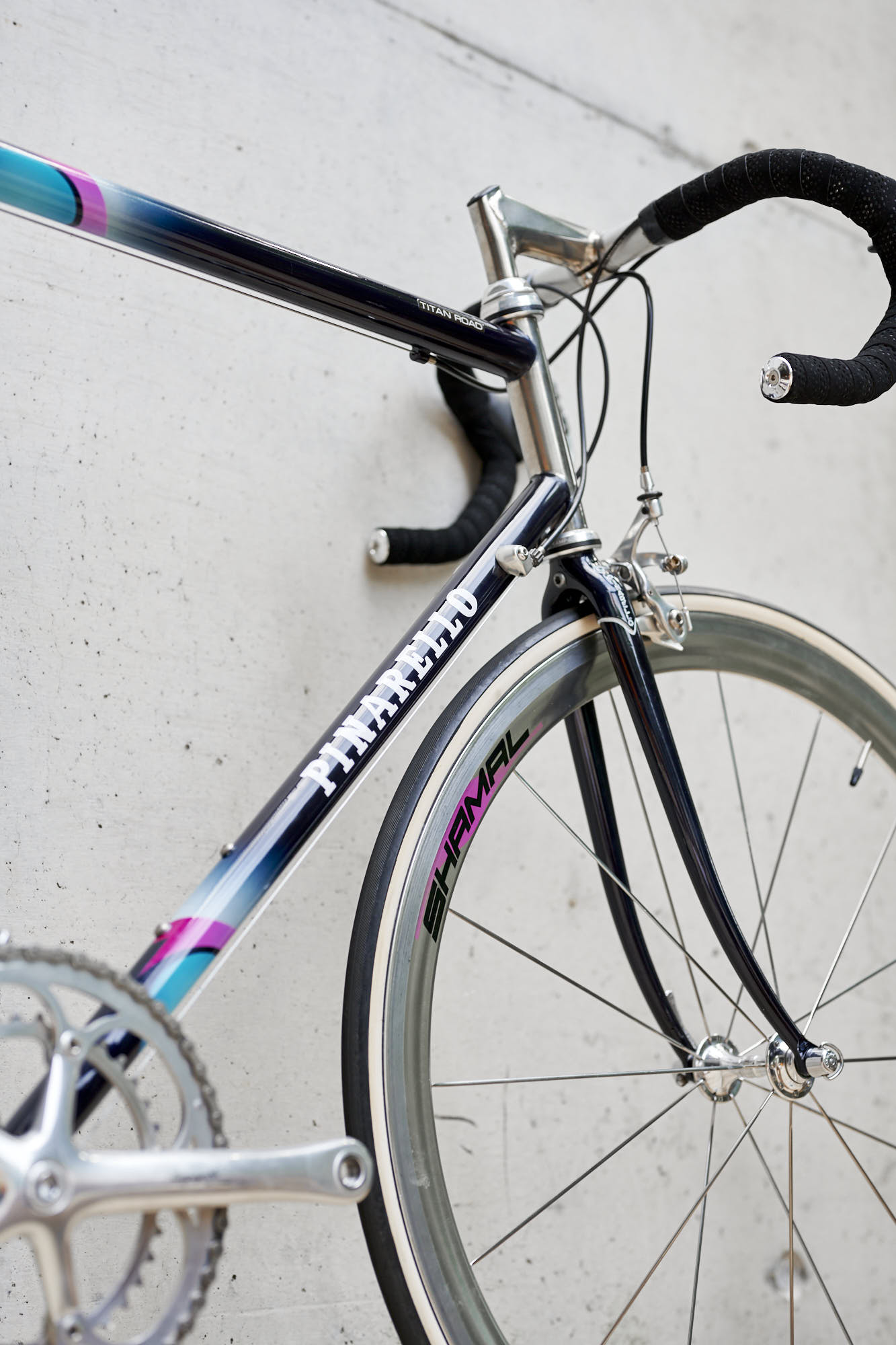
In the mid-90s, Pinarello found itself faced with the decision of choosing a new material for its racing machines. Steel was outdated and something new was needed. The Trevisio-based bike manufacturer decided without further ado to produce 100 titanium frames and christened this gem with the pragmatic name "Titan Road". These were welded by the most skilled frame builders, who used special TiAl3V2.5 tubing. The dropouts are from Pinarello and are said to be stiffer and more resilient than Campagnolo dropouts. It was the first and last titanium frame Pinarello made. In the late 90's they finally went to aluminum. That makes this frame so rare and historically valuable.
The frames went exclusively to selected dealers and professionals
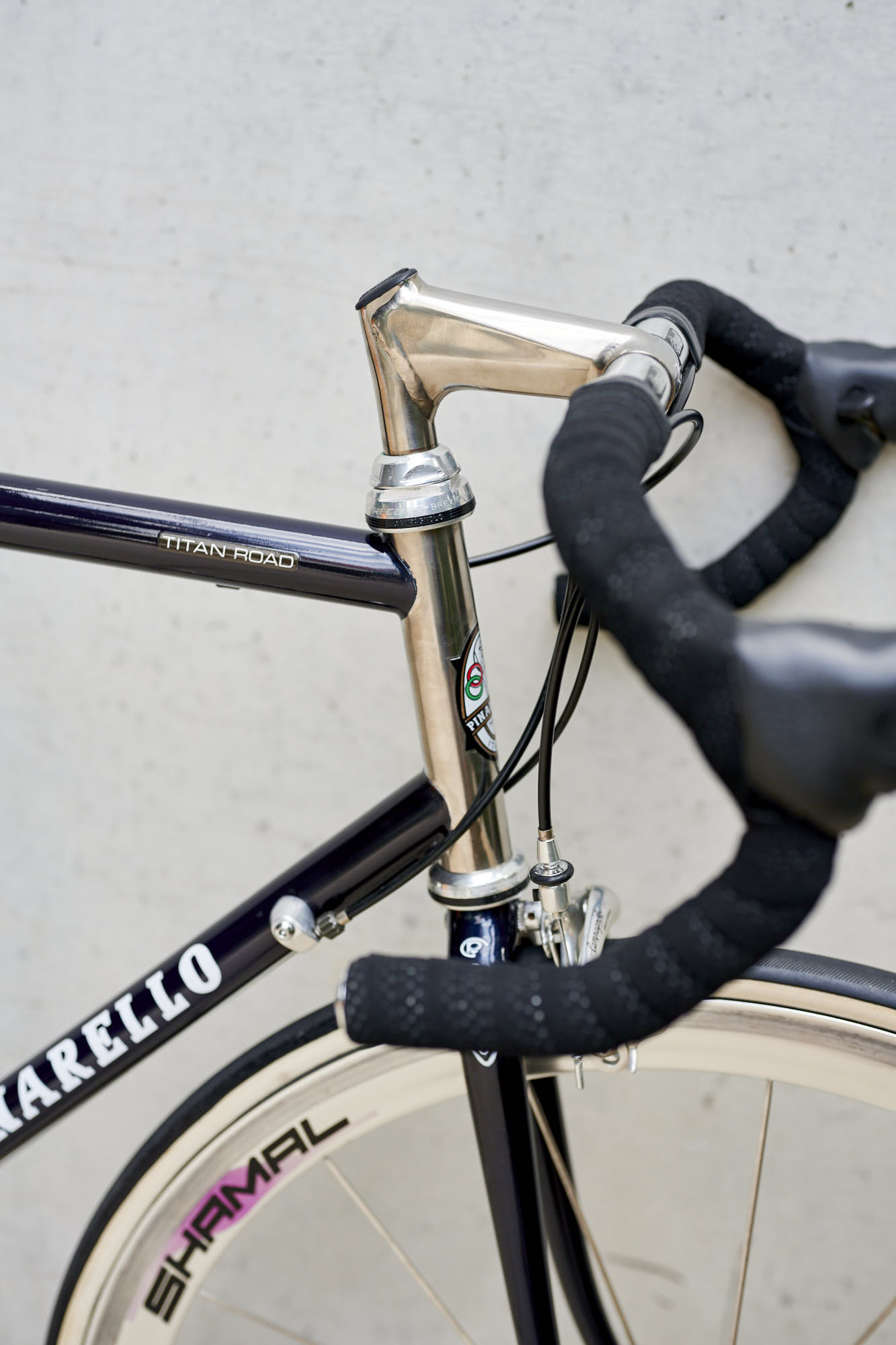
The story goes that many Pinarello dealers never knew about the Titan Road. Only selected professional athletes and Pinarello dealers received this frame. The frame was intended for competition. It received a good response, but was never produced in a large series.
The agony of material choice
The 90s were a time of upheaval. Previously, steel was the material of choice and had always been optimized further and further until it finally reached its zenith in the mid-90s. A few years earlier, there were already the first commercial attempts by bike pioneers to find a new frame material. The usual suspects were aluminum, steel and carbon, all materials that were also used in aviation. The first titanium frames emerged in the early 1980s and were made of tubes originally intended for hydraulic lines in aircraft. Due to the completely different requirements, these tubes were not very stiff. In the years that followed, well-known manufacturers took this on board and developed special titanium alloys that met the requirements profile of professional athletes. The TiAl3V2.5 tubes were the result. This designation expresses that the raw titanium is still added with 3% aluminum and 2.5% vanadium to increase the stiffness and strength.
A remarkable material
The material was discovered as early as the 18th century. The German chemist Heinrich Klaproth studied this element extensively and was so taken with its properties that he named it after the Greek deity of the Titans. It took many years before titanium could first be used for commercial purposes in the 1940s. With a density of 4.5 grams per cubic centimeter, it is about half the weight of steel. For its relatively low weight, it nevertheless impresses with its high strength and load-bearing capacity. If the material is expanded into an alloy, the result is a material with a low modulus of elasticity and high strength. Thus, a titanium frame withstands exogenous loads better than any other frame material. Its chemical resistance to corrosion and top values on the subject of material fatigue made this material highly interesting for frame construction and justified the experimental phase of many manufacturers with titanium in the 90s.
Lightweight, durable and comfortable
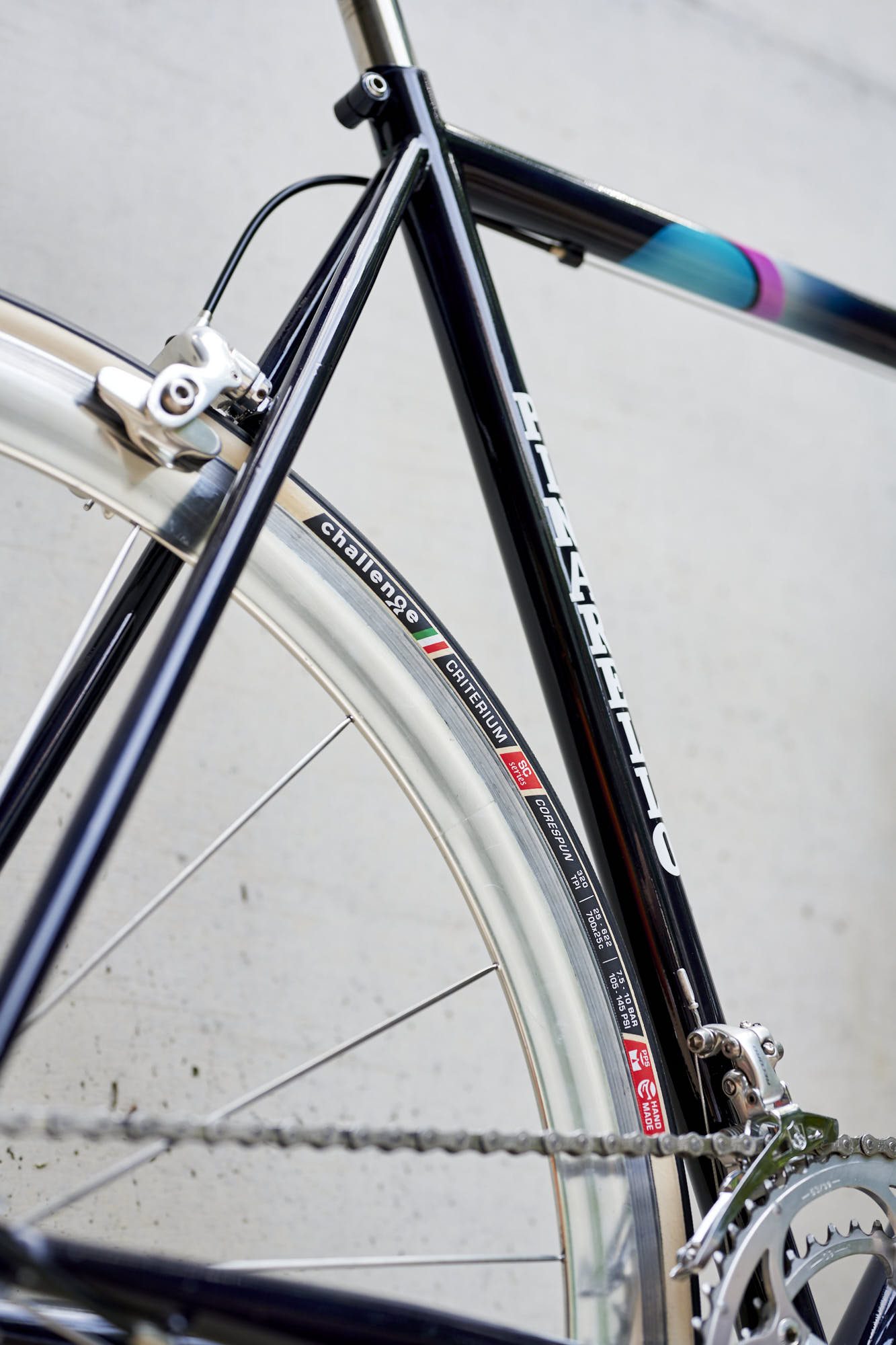
Titanium is lighter and more resistant than steel and does not show successive material fatigue, as is the case with aluminum, for example. However, it must be taken into account that titanium frames are stiffer than steel frames but less rigid than their aluminum or carbon counterparts. However, it is precisely for this reason that the good riding feel that so many titanium advocates always rave about is created. In addition, titanium is a material that is resistant to corrosion. That means you don't need any additional post-weld treatment and could leave the frame virtually naked and ride without fear of oxidation. And not only that - titanium also shines with excellent ductility values. These values imply the extent to which a material can deform plastically before cracking or breaking. The advantage of a high ductility is up to 30% higher deformability before fracture and, vice versa, a fracture is foreshadowed. Also, compared to carbon, titanium is not only resistant to one-sided loads, but can be loaded from alternating directions. This makes titanium a material with a clear safety advantage, especially in comparison to carbon.
An expensive fun
Titanium frames are not known for being particularly cheap. This is due on the one hand to the high manufacturing costs and on the other hand to the high effort required for processing. The extraction of the raw material alone is many times more expensive than conventional steel alloys. In addition, due to its nature, the frame has to be welded in a special oxygen-free atmosphere and can accordingly only be carried out by a few frame builders worldwide. This ended up being one of the reasons why titanium was not widely used as a frame material. This frame was no exception and cost a whopping 4500 USD in 1996.
„One Lever – One Action“
Archrival Shimano brought in 1990 their groundbreaking STI levers on the market, with which the driver must no longer move his hands from the handlebars when he wants to shift. Campagnolo reacted quickly and supplemented its C-Record group with the first "Ergopower" levers. These were subject to the same basic idea, but were designed slightly differently. Unlike Shimano, each lever had a single function and all cables were routed directly to the handlebars. There was one brake lever and two shift levers on each side. The brake levers were each for upshifting and downshifting. This system has proven itself and is still used today in modern Campagnolo Ergopower levers.
Titanium studded components make the difference here
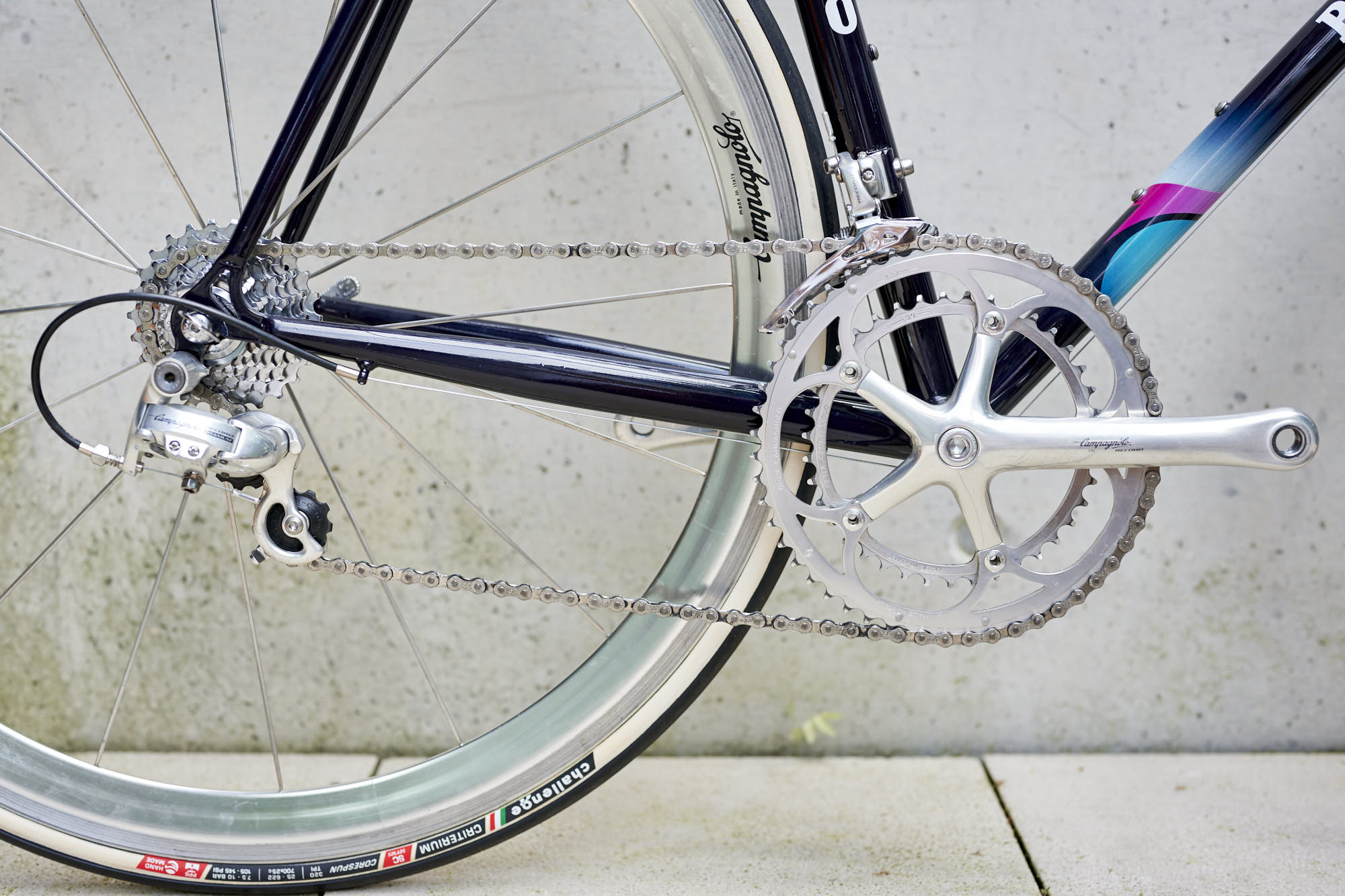
The Campagnolo Record Titanium group came on the market in 1996 and was the top model from Campagnolo. It was intended for professional athletes - for those athletes who fight for the last fractions of a second. Nuances made the difference between victory and defeat. So Campagnolo improves their previous Record group in many places without touching its basic design. Screws are coated with Teflon, small parts are made of titanium and bushings are coated with nickel. The weight and friction optimizations paid off and helped stars like Miguel Indurain to countless victories.
The first system wheel from Campagnolo
In the early 90s, the idea of the system wheel was born. Impeller that comes already fully assembled from the factory. The beginning of the end of the manual Einspeichen of wheels was thus sealed. Campagnolo patented his Shamal wheelset and brought him in 1993 on the market. It hit like a bomb and enjoyed great popularity among professional athletes because of its stiffness and aerodynamics.
Aviation technology in an impeller
Together with the N.A.C.A., the National Committee for Aeronautics, Campagnolo developed the design and proportions of the high profile rims and hubs. The radial spoke pattern and the internal routing of the spoke nipples additionally reduce air turbulence.
Manufacturer
Pinarello
Model
Titan Road
Year of manufacture
1995
Tube set
TiAl3V2.5
Groupset
Campagnolo
Paintwork
Night blue
Frame height c - t
59 cm
Top tube length c - c
56 cm
Condition
Very good, No dents or cracks, Frame has been professionally refurbished, New decals