Bauer Super Sport – Modell des Weltmeisters – Verkauft
This model was designed after Heinz Müller's legendary victory in the World Road Championships in the summer of 1952 and at that time corresponded to the holy grail of German frame construction.
More expensive than a Cinelli Super Corsa
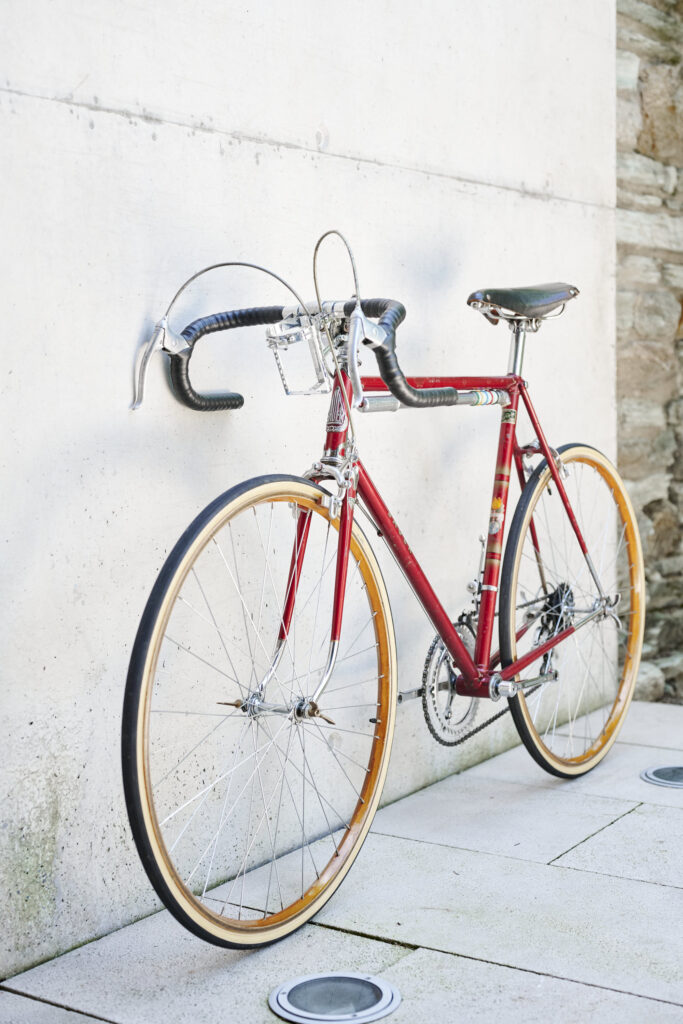
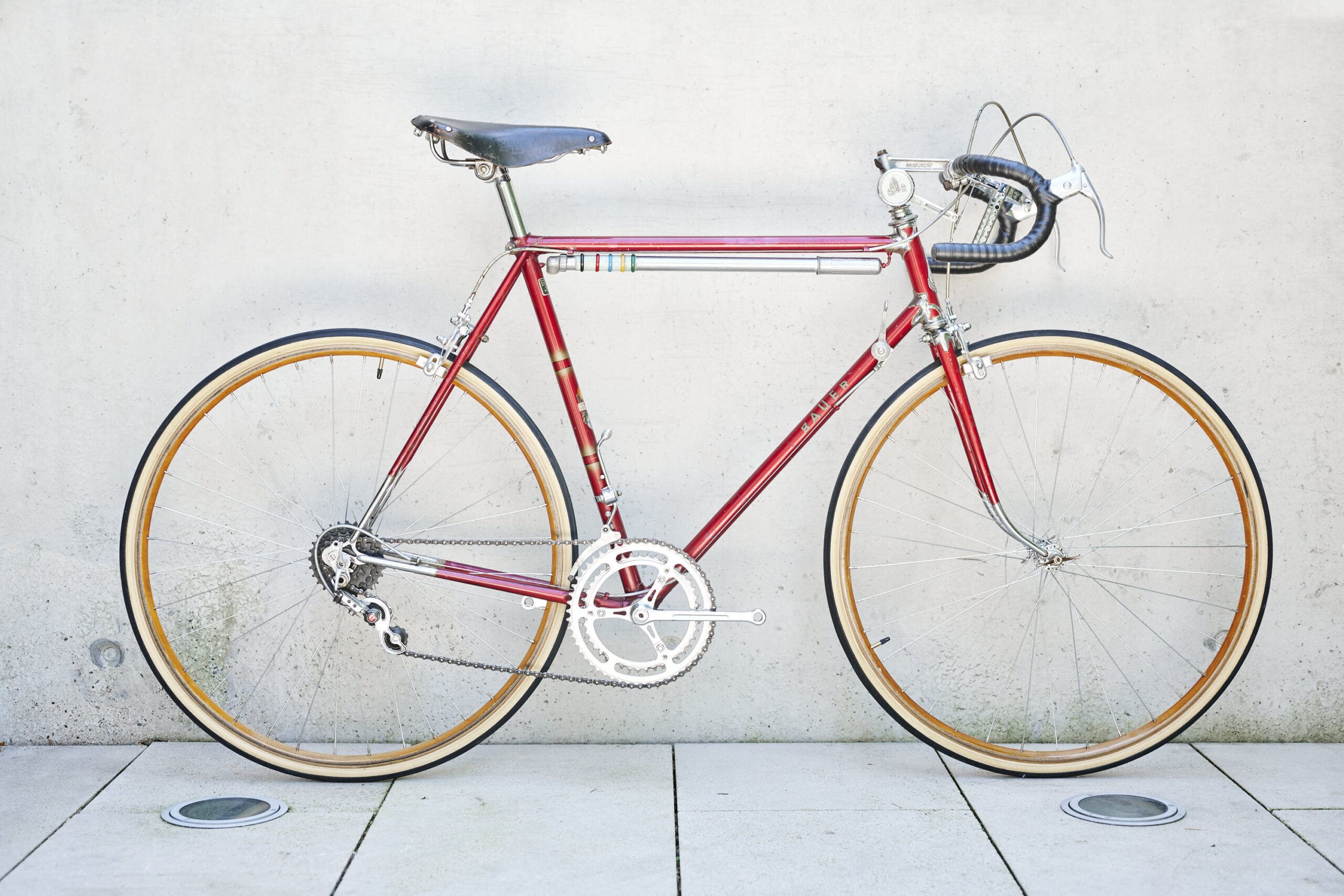
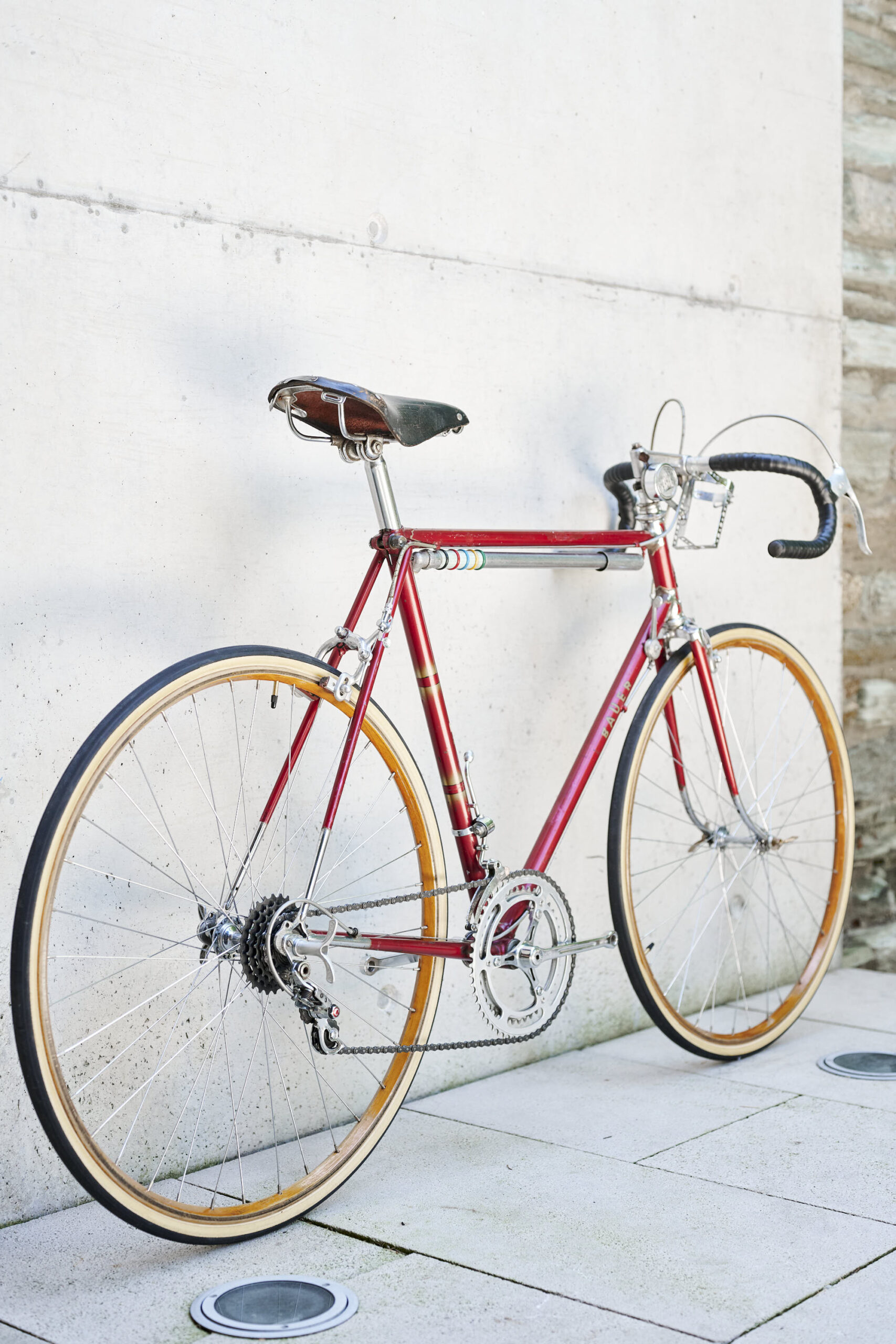
The Bauer Super Sport was the company's top model and became the German racing bike of the 50s and 60s after Heinz Müller's world championship title. The frame cost more in the early 50s than a Super Corsa frame from the Italian competitor Cinelli. The Super Sport underwent many adaptations over time. Thus, many different versions were created over time. This one dates from 1956 and is already equipped with chrome sleeves and dressed in red glaze lacquer.
Also successful in racing
Apart from his other products, Bauer had a very versatile range of bicycles. From city bikes to touring bikes to racing bikes. Until the 1950s, Bauer even had its own racing team. Günter Pankoke, for example, rode in the Tour de France. In 1952, Heinz Müller finally succeedApart from his other products, Bauer had a very versatile range of bicycles. From city bikes to touring bikes to racing bikes. Until the 1950s, Bauer even had its own racing team. Günter Pankoke, for example, rode in the Tour de France. In 1952, Heinz Müller finally succeeded in winning the Road World Championships with a time of 7 hours, 5 minutes and 51 seconds. He rode the 280 km at an average of over 39 km/h. As a result, the previous top model Bauer Supersport was given the additional title "Model of the World Champion". The 7-time German champion Ludwig Hörmeyer and Täve Schur, the later world champion and the GDR national team also rode Bauer racing machines.ed in winning the Road World Championships with a time of 7 hours, 5 minutes and 51 seconds. He rode the 280 km at an average of over 39 km/h. As a result, the previous top model Bauer Supersport was given the additional title "Model of the World Champion". The 7-time German champion Ludwig Hörmeyer and Täve Schur, the later world champion and the GDR national team also rode Bauer racing machines.
Founded in Frankfurt- Became a legend in Hanau
The Bauer company was originally founded in 1911 as a metal goods manufacturer and had to move to Klein-Auheim, which was still a suburb of Hanau at the time, only a few years after its foundation. There, the company eventually grew and employed up to 500 people who manufactured motorbikes, bicycles and bicycle accessories. Bauer always advertised with the slogan "Racing bikes from Bauer - A joy that lasts". Because one thing was known: These racing bikes were light enough to climb steep passages and still had the necessary stability for rough ground. Many young German cyclists dreamed of these bikes!
One gear lever must suffice
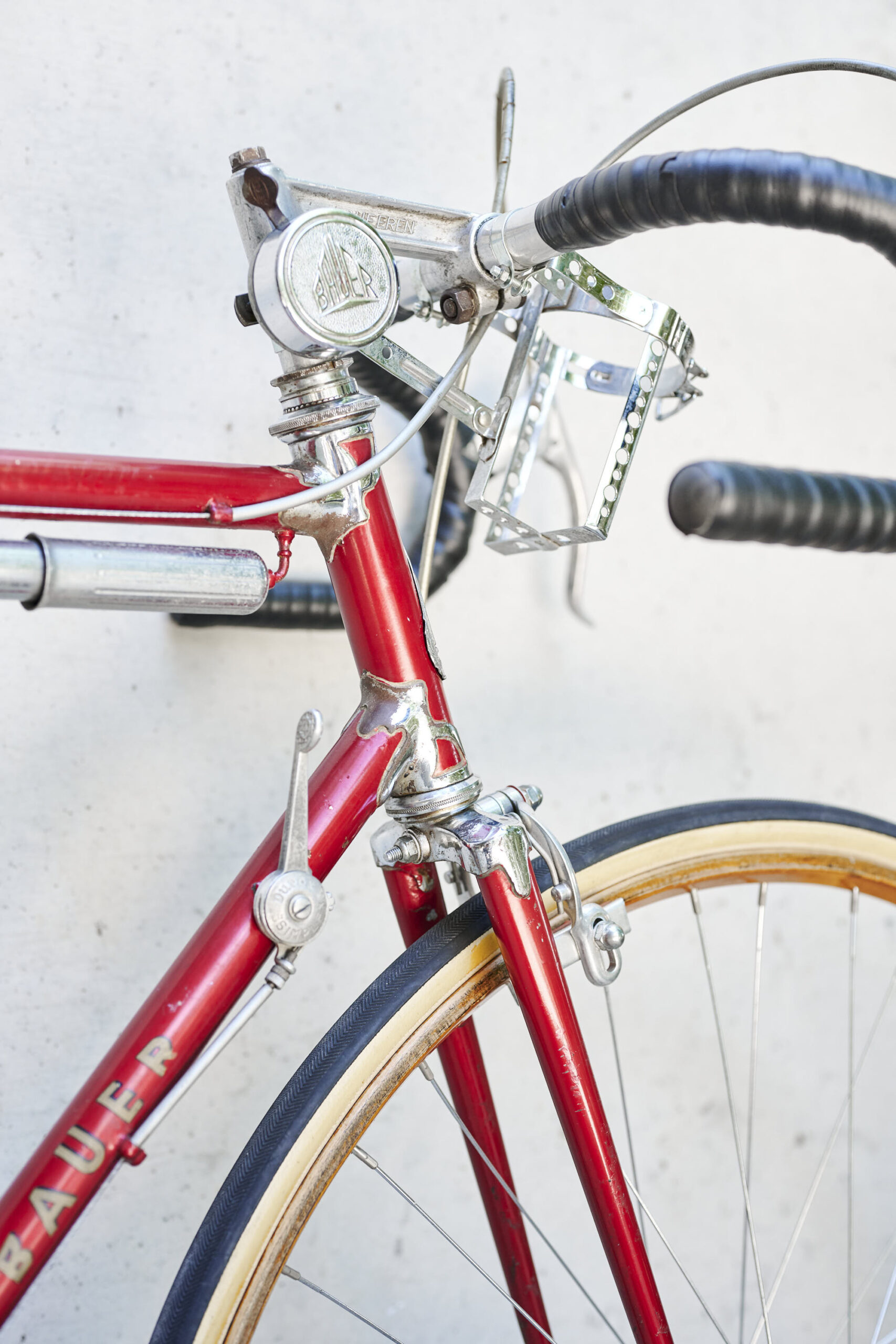
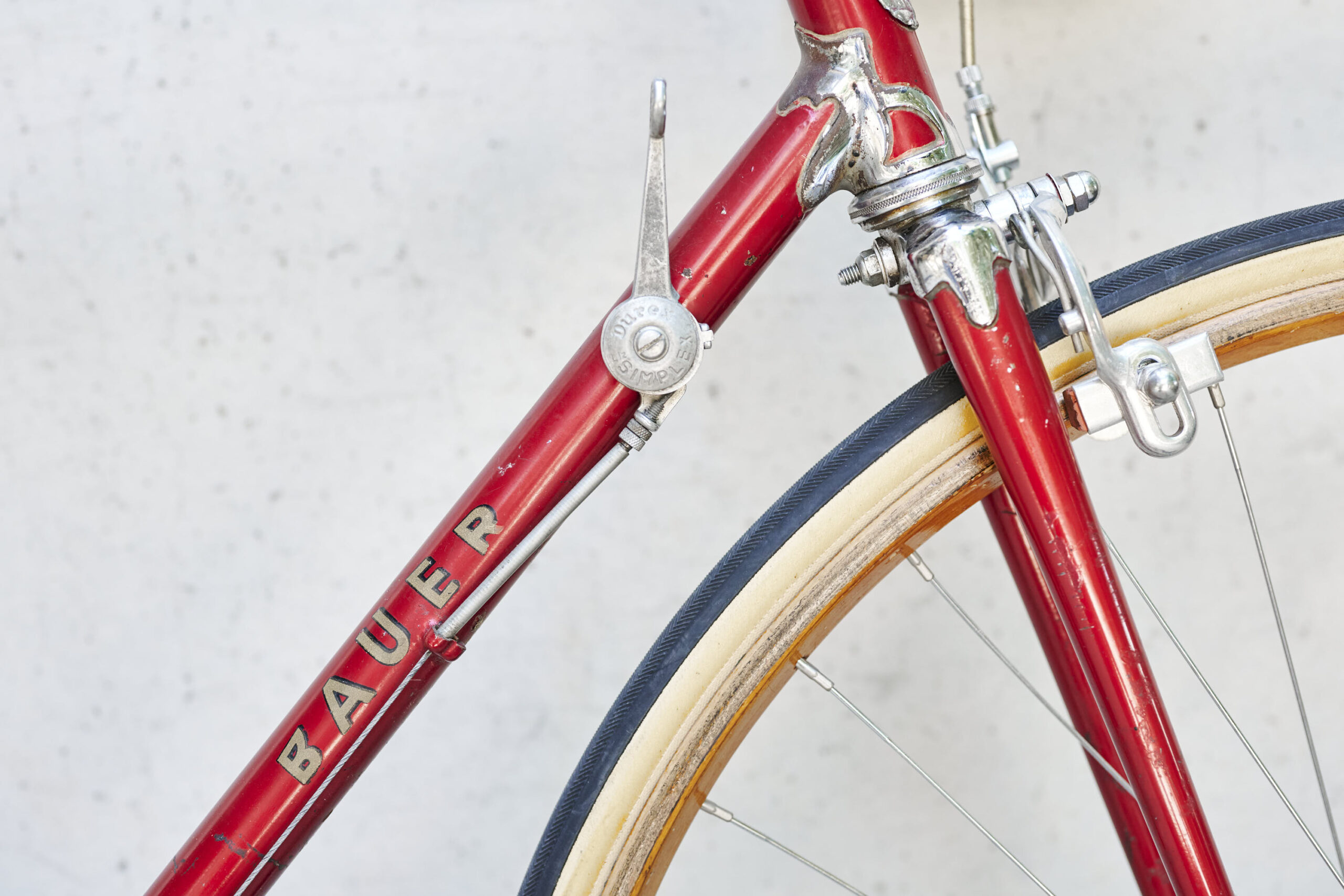
Simplex produced the "Competition" derailleur in the 1950s and became known for the pragmatic placement of the shift lever directly on the front derailleur. The rear derailleur, on the other hand, was already controlled with a frame shift lever. Shifting had to be practised but, once mastered, was a real relief on steep climbs.
Top equipment for the world champion model
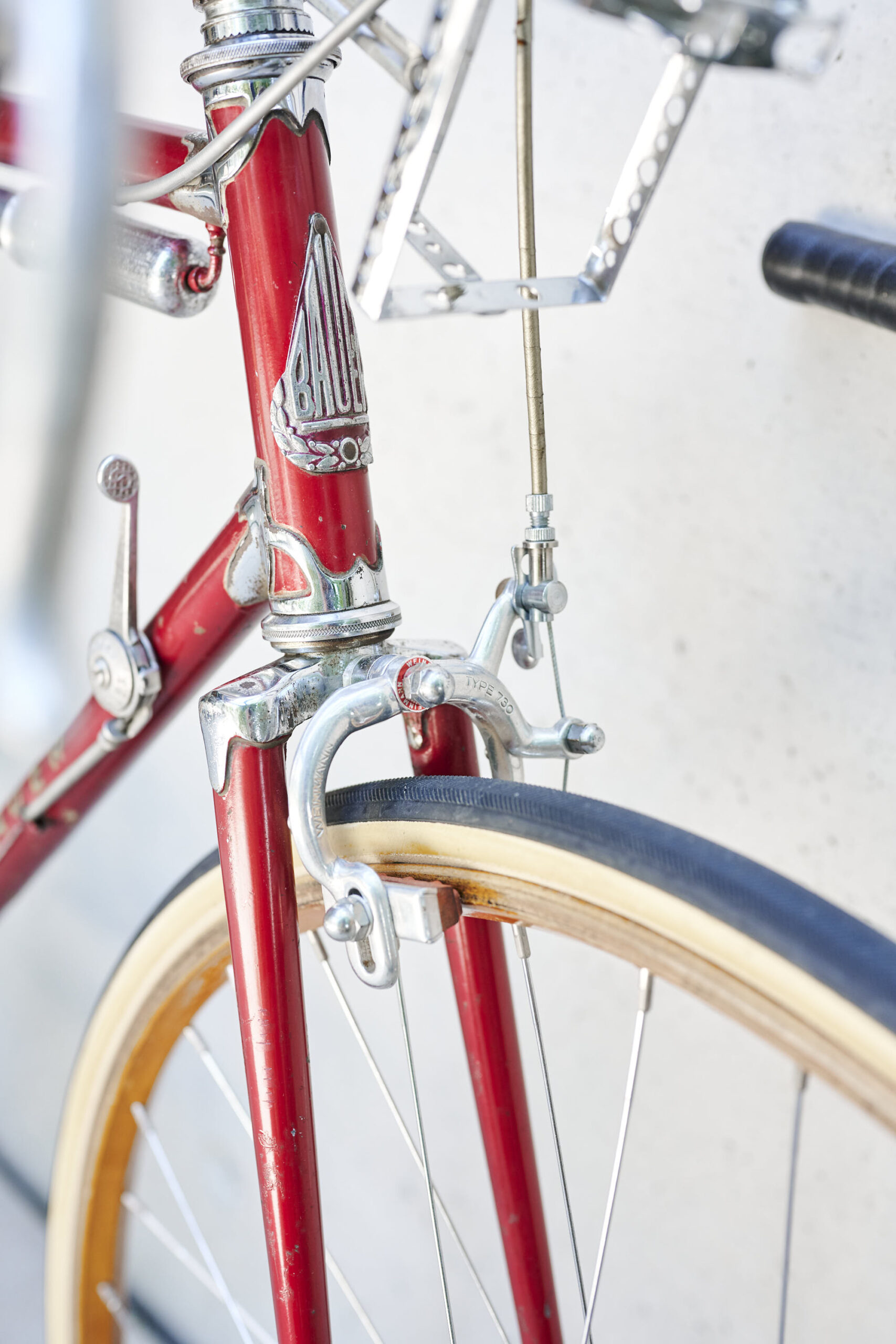
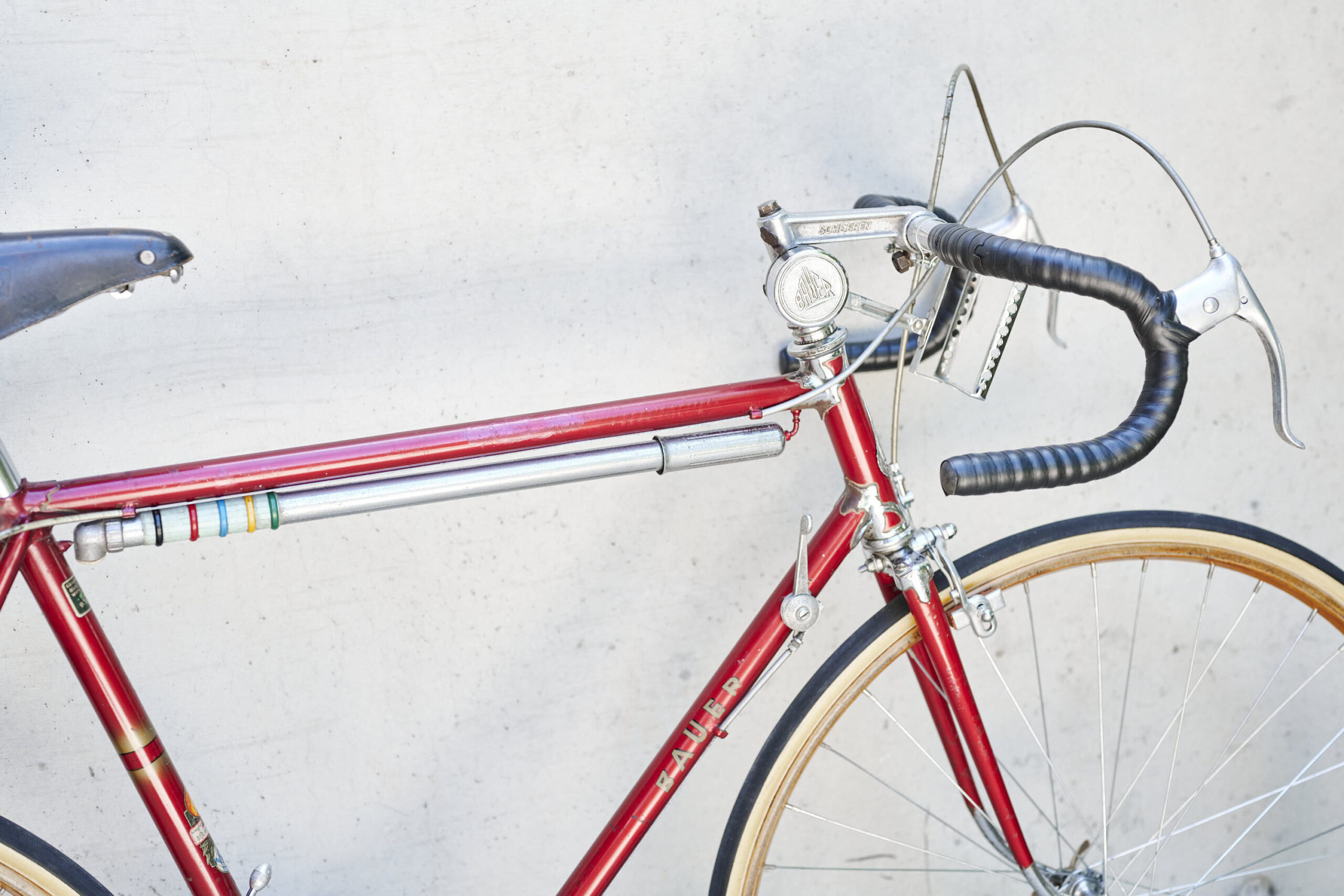
Here you will find everything from Stronglight headsets with Scheeren stems to FB hubs that the cycling heart of the 50s demanded. In particular, the Fratelli Brivio hubs were the best hubs the market knew at the time. The previous owner modified the drivetrain and fitted Campagnolo components from 1971 to the bike. The crank is particularly beautiful with its three arms and the Velox rear derailleur works perfectly. The bottle cage and Brooks saddle complete this bike.
Wood - a material from the beginnings of cycling
In cycling, a number of materials have been used and tested over time in the search for high-performance materials. The history of wood goes back to the beginnings of cycling. At the beginning, solid wood was still used, which then no longer corresponded to the state of the art due to the invention of pneumatic tyres. As a result, the rims had to be made slimmer, which was achieved by a multi-layer construction of long-fibre wood. The individual layers were glued together and staggered in order to prevent warping and to increase the load-bearing capacity. These rims were all painstakingly made by hand and at the customer's request.
The legend Cino Cinelli swore by wooden rims
Until the Second World War, wooden rims were the state of the art for racing and track wheels. With the increasing research into light metal alloys, they were finally replaced by aluminium rims. Nevertheless, the damping properties of this natural product still make old racing drivers rave about them today. Because of this, they were still used for a long time in cobblestone races such as Paris-Roubaix. Another advantage was the low thermal conductivity of wood, which prevented the rim from heating up on long and steep descents and thus evened out the issue of tyre wandering.
Manufacturer
Bauer
Model
Super Sport – Modell des Weltmeisters
Year of manufacture
1956
Tube set
Reynolds 531
Groupset
Campagnolo & Simplex
Paintwork
Red
Frame height c - t
58 cm
Top tube length c - c
57 cm
Condition
Original paint, no dents or cracks, the paint was partially touched up